
The High Atlas Mountains do not announce themselves loudly. There are no gondolas, no polished visitor centers, no sense that the landscape has been reorganized for outsiders. Instead, paths unfold gradually. Villages appear without warning. Life continues, largely indifferent to those passing through.
For travelers from the UK searching for something more grounded than packaged adventure, Toubkal Trekking operates within this quieter reality — offering access not just to altitude and views, but to the cultural rhythms that still define Morocco’s mountain regions.
Trekking in Morocco Is Not a Single Route
The phrase Trekking Morocco often brings to mind Mount Toubkal, North Africa’s highest peak. And while the summit draws attention, the surrounding landscapes tell a broader story. Valleys, mule tracks, terraced fields, and high passes shape journeys that are as much about continuity as challenge.
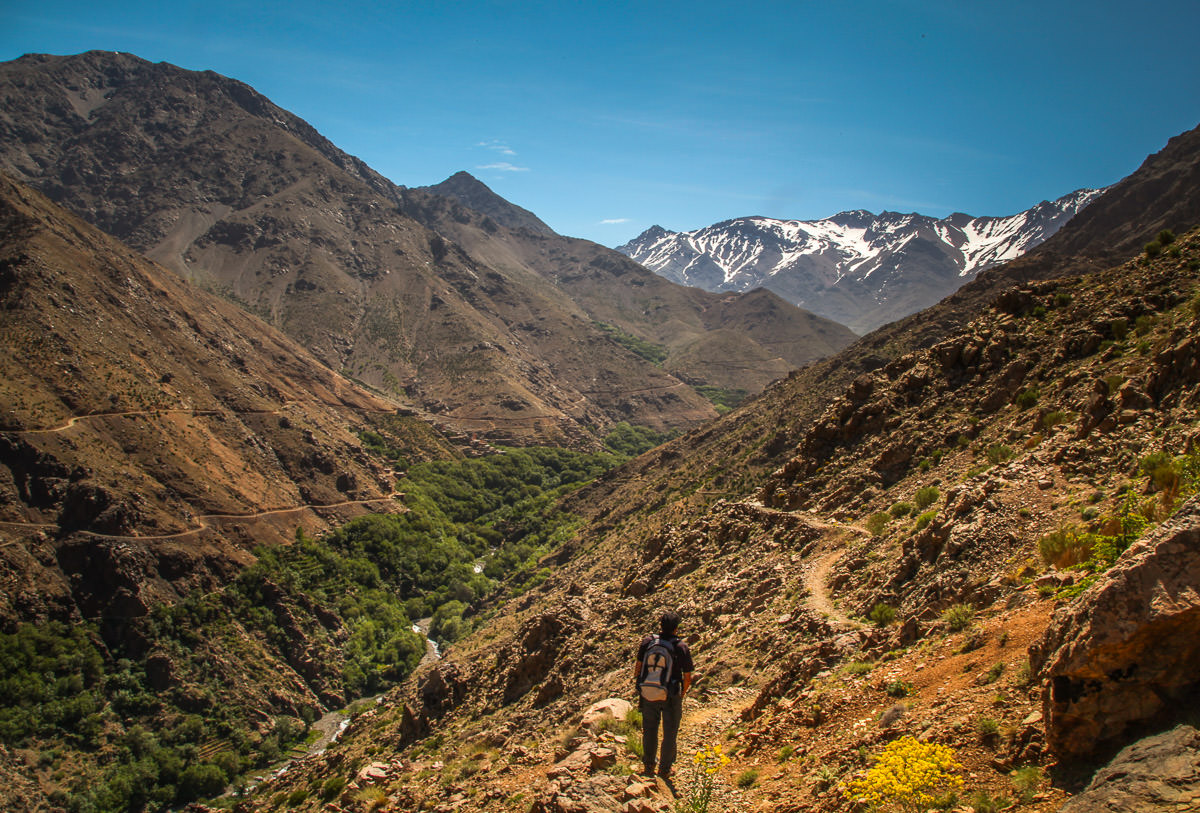
An Atlas Mountains trek moves through terrain that has supported pastoral life for centuries. Routes are not engineered; they are inherited. The mountains are not empty wilderness but lived-in space.
The Atlas Mountains, Walked Slowly
Unlike faster-paced alpine destinations, Atlas Mountains trekking encourages patience. Elevation is gained steadily. Days are shaped by daylight, weather, and the pace of those walking beside you — often local guides who know the land not by map, but by memory.
For UK hikers accustomed to marked trails and signage, the experience feels notably different. Navigation relies on people rather than infrastructure. Knowledge is passed through conversation, not placards.
Berber villages as Part of the Journey
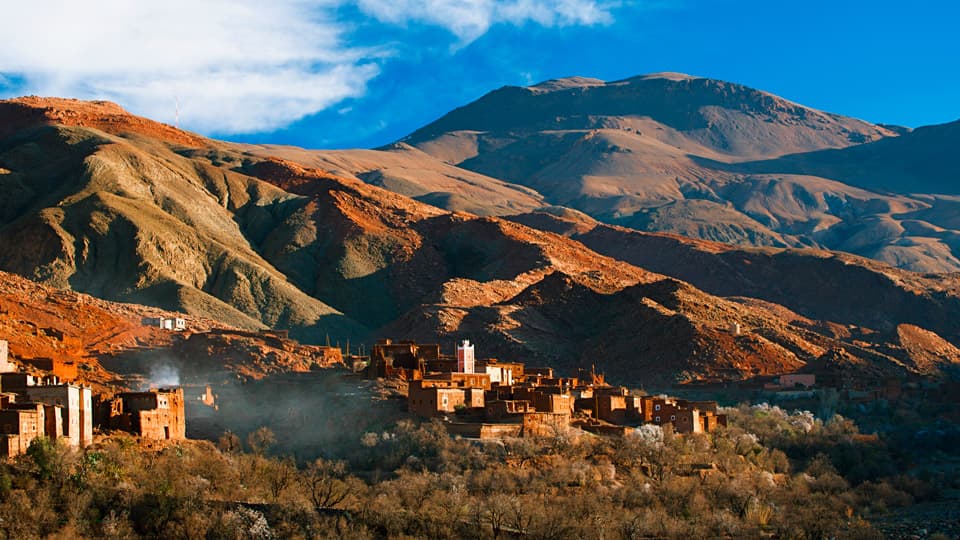
One of the defining features of trekking in the High Atlas is the presence of Berber villages scattered across the mountainsides. These are not stops added for interest; they are integral to the route itself.
Stone houses blend into the slopes. Children cross paths with trekkers on the way to school. Meals are shared in homes where hospitality is routine rather than performative. The experience resists spectacle, offering instead something more enduring — participation in everyday life, however briefly.
Hiking, Not Consuming
The growing interest in Hiking Morocco reflects a wider shift in travel preferences. Increasingly, travelers are stepping away from itineraries built around speed and quantity, toward journeys that allow time to settle.
Morocco’s mountain routes reward that mindset. Distances are manageable. Days end early. Evenings are quiet. Without constant connectivity, attention returns to landscape, weather, and conversation.
A Landscape That Shapes the Walk
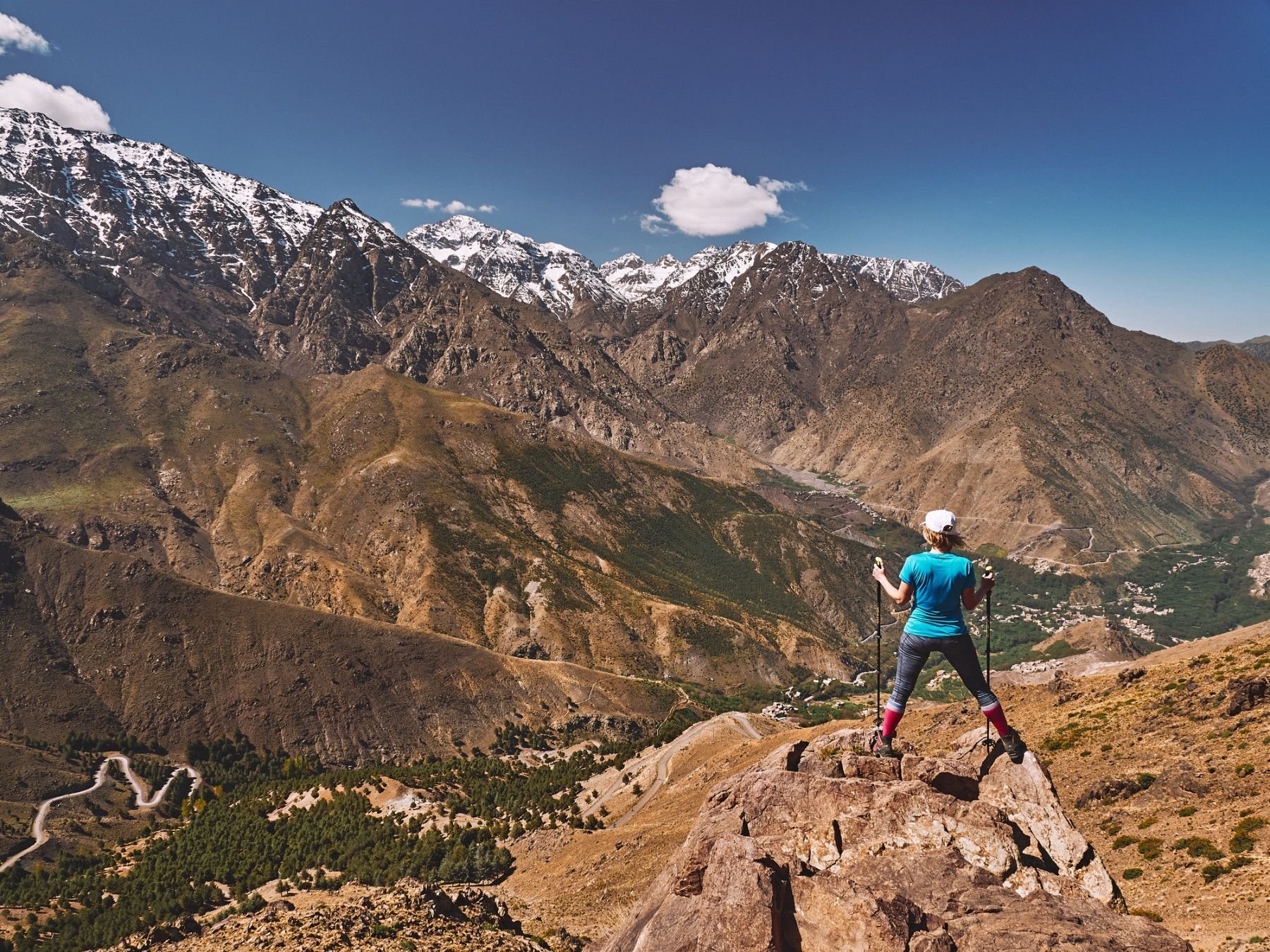
From arid lower valleys to snow-dusted passes, Morocco hiking offers dramatic variation within relatively short distances. The terrain dictates the rhythm. Steep sections slow progress. Flat plateaus invite longer pauses.
This responsiveness — adjusting plans to conditions rather than forcing outcomes — is central to the trekking culture that operators like Toubkal Trekking preserve.
For UK Travelers, a Different Kind of Accessibility
For hikers based in the United Kingdom, Morocco offers proximity without familiarity. Flights are short. Time zones align. Yet culturally and geographically, the experience feels distinct from European mountain trekking.
That contrast is part of the appeal. Morocco treks provide challenge without the commercial density of more established alpine destinations, and cultural immersion without the need for extreme logistics.
Guided, but Not Scripted
While guides are essential for safety, language, and navigation, the experience remains flexible. Routes adapt to weather. Conversations wander. Days are shaped by the group rather than by a fixed schedule.
This approach distinguishes Morocco treks from more rigid adventure tourism models. The mountains are not a product to be consumed but a setting to be respected.
Why Trekking Morocco Endures
There is a reason trekking in Morocco continues to attract those seeking something less mediated. The High Atlas offers scale without spectacle, culture without choreography, and challenge without excess.
For UK travelers, Trekking Morocco represents a rare balance — accessible yet unfamiliar, demanding yet humane, adventurous without being overwhelming.
Final Thoughts
The Atlas Mountains do not promise transformation. They do not sell revelation. What they offer instead is continuity — a landscape where paths remain paths, villages remain villages, and walking is still the primary way to understand place.
In a world increasingly shaped for consumption, trekking here feels quietly resistant. And perhaps that is exactly why it remains compelling.